clues at the scene

clues at the scene
Showing posts with label technique. Show all posts

Wednesday, December 5, 2018

The Pen, The Pen, The Pen


LAMY studio black  Fountain pen

Above, image from Lamy's web site used here for illustration: the Lamy Studio Pen. (here).

If you are looking for that perfect Christmas gift to make the long nights in the laundry room a little more bearable in the next year, the Lamy Studio fountain pen is a pretty nice item to put on the list.

I've burned several tens of thousands of pages with mine. I like it is much today as when it was new from the box. More so, really. The nib has flattened and shaped itself to my writing stroke and glides without effort across the page. That helps with those difficult scenes.

I've a couple pens with which I'll travel and I always have a Kaweco Lilliput in copper hanging around my writing bag. The studio stays at my writing desk and in it I find comfort early in the morning or late in the evening.

The act of composing works best for me when I am on an even keel and able to use my most creative impulses for my prose. I'm not solving some interpersonal issue in the background or worrying about finances or even thinking about a new boat I shouldn't buy.

I'm writing.

The tactile familiarity that comes from a pen which is now a comfort helps transport me to my story, my characters' minds, and my vaguest of plot intentions.

I know a great many writers compose on the keyboard. Save the backspace key!

Try a little longhand and the cross-out. The composition pass of transposing your longhand chapter into the electronic format gives you that "one more chance" to tune the prose before committing it to your opus. Hemingway did this with his writing.

Besides, a little ink stain on your finger looks writer-ly when you stop by the coffee shop. Anybody can wear a big woolly sweater. Inked fingers? There's a mark of distinction.

Okay. So the noise canceling headphones might be a better idea to deaden the sound of the dryer while you write.

I lived in a laundry room for a few years. I can sympathize. The card table upon which I wrote evolved into the sorting and folding table so I had to move.

It's difficult to plot a murder while under the threat of the leaning tower of underwear.

Consider the pen. It feels good in the hand.


Thursday, November 8, 2018

Old Friends

Image at left from Rodrigo Paredes of Argentina and hosted on wikicommons.

I encountered a group of old friends today and was struck at how easily we took up conversations suspended for years. Helps that they're my countrymen and in our part of the world, this is how things go.

We'll probably end up in the same hermit colony.

It occurred to me that introductions and new interactions are frequently the stuff of commercial fiction.

When was the last scene you remember coming across where the characters had a great deal more history and context behind the encounter than the reader knows? How was it handled?

I recall a business encounter with a close friend also in the business ... she kissed me on the cheek. My subordinates were shocked. I was a little shocked, too. That doesn't happen much in my world.

Would make a great scene, though.

Unexpected familiarity makes a great bit of drama on the page both for the reader and for the other characters in the scene. Yes, we have to provide context; but, we don't have to tell the reader everything.

Old friends make a great encounter I haven't used enough.

Tuesday, November 6, 2018

The Scene I Have to Write

A public domain image at left of a first folio edition of Shakespeare's plays. Image hosted on wikicommons.

I'm sure it happened to the bard. There are scenes don't work well in the end and are cut or changed or mashed into some other scene.

We have to write them in the draft.

I call it "hamming it up" -- where there seems to be a payoff scene I want so badly to write but I know that in the end I'll probably cut or re-craft it to a fraction of what I desire to compose.

I have a story about a Madoff-style grift in action. We never see the end as the payoff in the story is a relationship change between two principal characters. 

For years, each draft included the beautiful explanation of the intricacies of the fraud. The story suffered for it. In the final draft, the fraud is just a passing thing described as if a baseball game. There's "Tiger's won 2-to-1 in the eleventh" and there's the detail description of every pitch in the last three innings.

I find scenes I have to write. I have to get them out. They're close to the pitch-by-pitch business above.

I hope now that on the "second pass" I will clean-up all this indulgence because I know when I start out on the page the first time that I'm wasting the ink.

These scenes make us happy. I at least have to write them. They encourage the longer work.

I wonder at what scenes Shakespeare "had" to draft that he later discarded as indulgent?

I wonder if he had any? Did he tell himself the story over and over until he'd pared down all the fluff before he took up the pen?

I'd like to know.

He paid more for his ink than I do mine. Did he place a higher value on committing it to paper?

Tuesday, October 30, 2018

Placing the Clues

At left, public domain photograph courtesy the US Forest Service.

Here, two experts discuss the optimal placement of the second body in the plot map of the story.

We know the first body comes in the first act. Duh.

I have a holiday story that I've played with for a few years now. Ugh.

I hate writing that.

Anyway, cute opening (for a holiday murder)  as my former police detective makes his way to an all night diner where the investigating officer devils him a bit. We learn the officers married sisters and only one marriage took. Only one career took as well.

Guess which one?

Anyway, the story just never works in the last two thirds.  I'm two slow on the second body and the whole business drags.

I'm not Chandler. I cannot delay the complication indefinitely. I can't have my character drive around blithely in the car engaging in an internal monologue.

I need an action event.

Now, my second body is going to be immaterial to the primary case -- or so we think until the twisty bit at the end. That's beside the point.

I have to get the reader to the end of the story for any of my slight of hand cleverness to matter.

I don't know why I haven't realized the second murder comes too late in the story before now. In some versions, I don't even have the second murder.

I mentioned it is a holiday bit, didn't I?

I'll make some notes over Thanksgiving and box it for next spring when I'm letting the long-form project cool on ice. This holiday diversion is a short story.

I can't believe I didn't see that the action was dragging.

I honestly thought it was the language. I thought the tone was too noir.

I can be an idiot sometime. Where'd I put the body map?

Tuesday, November 28, 2017

First, Tell Yourself

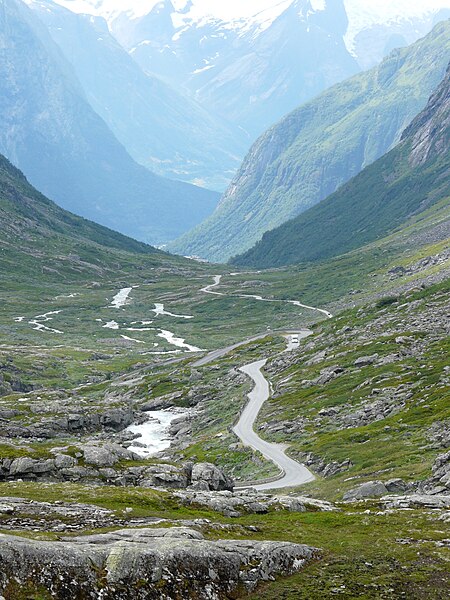
At left, G. Lanting allows us the use of the road image for just the attribution. Thanks! Road image hosted on wikicommons.

This is the Old Strynefjell road in Norway. Good metaphor.

I have to tell myself the story before I can write it. I don't know all; but, I have a map: a vision.

I have a beginning, middle, and an end.

Projects I can see to completion have this map. Many of my still-wip projects did not and still do not have such defined elements.

I tell myself the story. I write a draft. I write another draft. The story becomes full, integrated, and comprehensible in the process.

Today, I picked up an incomplete project from the fall of '16 and in a revision, I managed to tell myself the story.

I've a map for the next one to compose now. I've characters and their traits. I have events and their meaning. I know the end. I know the killer. I even know the why.

It isn't important the reader know all those things even after finishing my tale.

It is important I know it before I compose the first full draft.

Feels better to me this way.

Might feel better for you.

Certainly it makes the hours in the composing mode much more enjoyable for me. It's easier for me to find the correct words when i know in advance what I want them to do for me.

Great looking road, eh?  I'm more a "drive along the valley floor" fellow than a "drive along the ridgeline" sort. 


Thursday, October 19, 2017

Tides of Ink

At left, Hemingway in a motor launch, 1931. Courtesy the John F. Kennedy Presidential Library. Public domain image.

I didn't have a good picture of a writer sailing. This image is what I could find without much work involved.

I work on project A. I have ideas for project B.

Somehow, that just seems wrong. If you had ideas for project B and spoke to me about them, I'd understand you to be sabotaging my effort. Got it.

When I have ideas about project B in the middle of project A, it is merely the process of an undisciplined mind moving on in the normal half-complete state I seem to live my life.

It is if I depart on a boat and am never to reach my destination.

I've solved this problem this time.

I've got a secret tool. It's called a map.

I'm following it.

Don't stray too far from the path. There are bears in the woods and sharks in the waters.

I haven't much else witty to say tonight. I have to write a scene where I tell a new widow that she is one.

See, I have a map.

Sunday, December 4, 2016

The Opening, The Opening, The Opening.

Image at left hosted on wikicommons. Photographer: Russell James Smith. Lovely work and for the mere cost of attribution Mr. Smith allows its use here. Thank you, Mr. Smith. Great photograph.

Do you catch her eye and smile? Do you walk past and smile then? Maybe you wave at your friend at a table in the back along the wall and then smile at her before you start to walk.

It's an opening. She's there with friends just as you are.

Something tells you at first sight that that you should meet before the reality sets in and you know to just shuffle past to the pint waiting on the table. It's the better play. You won't forget the pint's name mid-conversation or find out she's Jeff's sister who you've already met twice.

For that instant though, you have a shot at the opening. You have a chance to meet and hold a conversation. You have a chance to say something.

That's your reader. They're just that elusive.

What's the opening and how can you keep them interested after smiling and saying "hi"?

In wading through my critique backlog (sorry all), I figure three sentences are about what it takes.

That's the reader's level of patience. You're in the bookstore. [ You know, place with books you buy. Google it. ] You're browsing. You open a book, look at the first page. You read a little and put it back.

That's what we've got as writers.

"A little of the first page."

Makes the whole she's-here-with-friends-just-like-you scenario look a whole lot easier.

The revolving door's swish-hiss didn't bring me out of Applied Thermodynamics there at the front desk as I held down the night manager gig. The sauntering tack-tack-tack of Saint Laurent's -- maybe Fendi's ? -- finest across the marble floor brought me right up on my feet. You learn things as the late-night man at a certain class of discreet downtown businessmen's hotel: expensive wives wear heels to a murder.

Maybe. Pretty staid. Has a mouth-feel after reading that's a little like cornmeal.

The sound of a pair of Saint Laurent's sauntering tack-tack-tack across the empty late-night lobby brought me to my feet, night manager and all. The revolving door at the front hadn't stopped its motion before she stands at the desk: a coiffed five-foot-nothing redhead walking on my month's paycheck worth of shoes, a Chanel suit smartly tailored, and an Uzi with the faint sheen of fine oil. She smiles.

Still slow to open. Nice -- but you're broken to the yoke. You know what to expect on the second one because you read the first. We don't get that in submission and it sounds like something else you've read from 1958, anyway. Hammett's books are still in print.

Again.

A fully coiffed five-foot-nothing of redhead steps out of the hotel's revolving doors and into the empty lobby wearing a smartly tailored Chanel suit and carrying an Uzi by its suppressor. She smiles at me as her heels tack-tack-tack a purposeful saunter across the marble. I smile back. My job. I'm the interim night desk manager, three years running.
Better. We're into something we didn't expect and perhaps a reaction we didn't anticipate. We might read on.

Not much difference between the words in these three openings. The first two drew a ton of passes, though. The third saw more success.

We're in the action in the third version from the first three words.

We're barely in the action on the first version by last sentence of the opening paragraph.

It's the second-to-last sentence in the second opening before we have anything "sharp" in the prose and then there's the last line twist, which I like.

The third puts us there and the tongue-in-cheek surety of the narrator ( whom we're sure is a smart-ass in the nicest way ) gives us reason to hope this isn't something we've read before. We can hope.

Coiffed redheads with Uzis? Break out the good stuff.

I've chased a lot of blondes. I marry redheads. I've got a thing for trouble.

Makes writing mayhem and murder a natural choice there, doesn't it?

Spill some ink like it was blood. Mind your opening moves.


Friday, November 11, 2016

Make a Mess, Clean it Up

At left, public image of Hemingway writing away at safari camp in Kenya.

I'm cleaning-up some almost-ready-for-submission stuff. There is a bunch of that lying around and the tedious mechanism of "writing" rather than "telling the story" is all that is left.

"All."

So, drafts upon drafts. I've got a couple of commitments to shove out the door in order to return to the non-fiction. Nothing like wanting to do "project A" to make "project B" loom as suddenly quite important!

So, taking a piece, taking it apart, and putting it together again sweating every word choice, line of dialogue, omitted or included scene.

You tell the story on the page -- you make the mess. You write the story -- you clean it up.

It works that way for a lot of us. It's worked that way for decades and decades for a lot of other writers, too.

Not a bad gig if one can get it.

Hope your ink dries fast and doesn't smudge.

Wednesday, January 6, 2016

The Addiction of the Ink

At left, a vial of morphine taken from wikicommons as placed in the public domain by Stickpen. Thanks for that.

Here we have it: morphine. Why bother with the middleman? Go straight for the hard stuff. This is it.

I've been writing. I've been ignoring the blog because I didn't think it helped me write.

Maybe it does.

It's been an especially creative period over the holidays. I hope you can say the same.

I have ink stained fingers. I am in a composing phase and have spent a lot of time with fountain pen in hand. I believe I am producing better stories. I'm happy about them.

I like the odd little perspective: the unusual twist. I like cleaning ladies who moonlight as enforcers for a drug dealer. I like lawmen who are as bad as the criminals. I like heroes who prefer to not do the right thing but who cannot help themselves in the end.

I like big dogs in little cars.

Stay off the sauce. Stay on the ink. The stories will come; but, you have to finish a lot of them for little tricks to all work out as you want when you are composing.

I have to get a little more ink on my paws tonight before I turn in ... and so do you. Keep that pen and paper handy. Kill your television. Cancel Netflicks. Block Hulu.

Tell some stories. Tell some stories you like ...

The hardest part is that first pass where you tell yourself the tale and then have the courage to turn right back around and re-write with little markers where all the juicy parts you though of "too late" in the first pass ought to fold back into themselves.

Messy? Sure.

But fun.

Take a hit. It's only ink.

First one's free.


Tuesday, June 9, 2015

Take It With You

At left, Finnish children on parade. These are probably refugees of a sort from the war. The photo doesn't clarify beyond saying they are Finnish children.

Copyright free image from wikicommons due to age.

I like this photo for the suitcases.

I lived out of a suitcase like this when I was a little older. I had a "two suit-er" and almost everything I owned fit inside it. Almost.

If I knew I'd be dragging bags after me for the next forty years I might have blown my head off right then. As it is, I've got it pretty good - except that I'm still "Packy the mule" when traveling with Frau Bear. Comes with the role.

I take my fiction with me. A lifetime of being "somewhere else" has taught me how to shut out the outside world. I've talked to writers who need the solitude or the inspiration of the lonely beach or the cry of the loon. I've not however talked to many writers with a number of books in print with this disclosure, however.

I attended one of those high schools without walls. Yes, back in the 1970's there was a move to "break down the walls" and create an immersive flexible environment for learning. These are largely noisy unproductive structures - until you learned to deal with the distractions.

Who knew that I'd be so well prepared for cube farms that I'd find door-less offices and open bullpens comforting?

I think it is all bullshit, by the way. The first thing we give you once you make field-grade in the corporate ranks is a nice think oak door with which you can shut out the rest of the world and get down to that independent knowledge-work of which you do so much.

Yes, I see the satire dripping a bit, as well. I didn't shake my brush well enough on that line.

Anyway, I am one of those knowledge workers and I do shut an oak door and work independently. I also sit in a coffee shop and scratch away. Location means little to me. Focus means everything.

With that, I've had great success carrying a small pocket notebook devoted to the current WIP in my trouser pocket. Last year, I bought a little leather cover for these - typically - Moleskin notebooks. It really helps their endurance.

Anyway, I find carrying my fiction around in my head helps me focus on those things that are lost when I'm wallowing through prose. The chance to be a portable writer gives me the opportunity to have things strike me, record them, and move on where in prior years this inspiration and clarity would have been lost.

When you have a volume, a WIP, a short story, you do carry it around with you.

I'd suggest packing a little bag for it next time and carrying that in your pocket, too.

Your story is a refugee until you finish it and grant it an identity. Help its journey with a little luggage.

You might call it the baggage of your writing. Clever turn, that.

Not clever enough for the remark, though.

Back to it. Work to do.

I should write that down.

Monday, April 27, 2015

Early in the Morning

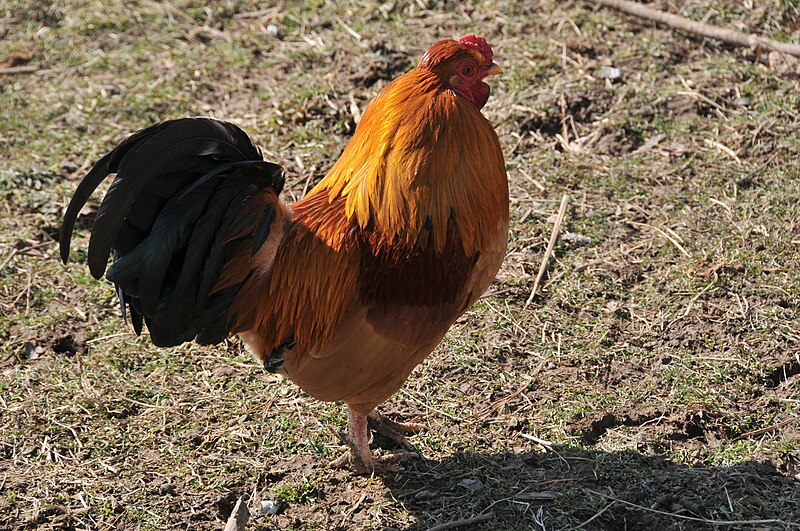
At left, a rooster from wikicommons as photographed by Gary Crossey. Nice bird. Looks loud.

Allergy season is open. The sagging will and general lethargy hits until about 11:30 PM where a good two hours is spent being uncomfortable until passing out.

Nevertheless, it renders my preferred time to write useless. I'm an evening scribe.

I discovered last year that I am much more productive in the mornings during this time of year.

So, cock-a-doodle-do.

I am not wild about rousing, but I am wild about getting on with this project. If that means getting out of bed then I'm up and around.

Coffee please. Additional coffee.

Might help my more sprite-ly characters this time around, though. Lively as in imbued with life.

I've had enough brooding introspective killers. I want murderers with smiles on their faces and songs in their hearts.

I'm going to put a badge on a couple of them.

Monday, April 20, 2015

Unseemly Demise

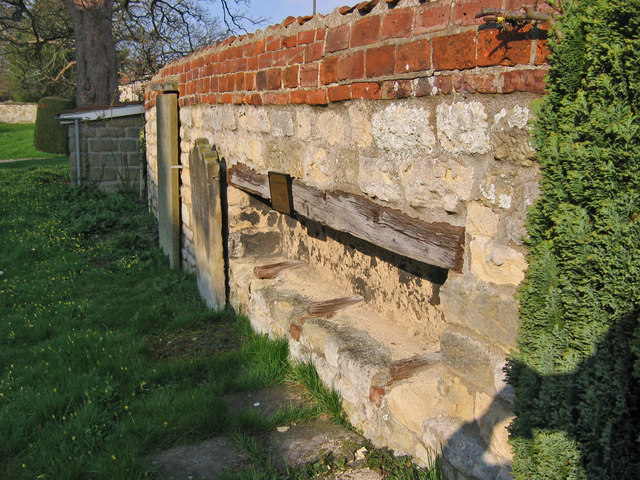
At left, a coffin-rest as photographed by Stephen Horncastle as part of the Geograph Uk project.

This particular place was used to store the parish coffin. When one died, the coffin was used to carry the body to the grave and the simply shrouded remains then placed into the Earth. The coffin rested in this facility after burial until the next mortal needed the transport service.

In small villages, you didn't even rate your own pine box in the 18th century.

I like this photograph because it illustrates the sense of community and community embrace that persisted in death.

I'm trying to illustrate the same community thread in my work. I'm writing a short right now that has to be purged before I can work on the next novel. I've had a hard time with it - but haven't we all?

I couldn't find the proper mirror for the reflection of the person my killer has become. I couldn't find a way to highlight the trans-formative power of education at the hand of a small town. Of course, the reflection I seek is in the town itself.

I sat in a cafe a year ago and watched a mother teach her child to lie.

The mother, in the presence of her own mother, ask the child who was probably in primary school which grandmother was his favorite.

The child answered innocently that he preferred Grandma Helen. The matriarch present was not Helen.

The mother couched the child to try again and told him the he was in error. That Grandma Zoe was his favorite and that it wasn't nice to say otherwise. The instruction was more elaborate with additional esteem-defeating measures thrown in for good cause.

Now, in telling the story, I could focus this slight tale on the boy through a first-person point of view. I think I can do better as a close third as it allows the image of the mother to be cast in broader terms than I might be able to do from the perspective of the child in the first alone.

I'm trying the same with my small town murder tale.

It's hardly a mystery who has died or who has performed the murder.

It is a mystery how the protagonist learned to kill. That's the story we want to tell. It doesn't "just happen."

Killers are made.

I want to show that evolution in succinct turns of the short-story's compressed timescale.

Wish me luck.

I hate murders without reason. I'm trying to give this one purpose, if not reason.

If you're in a small town, lock the doors.

I've ink and I'm willing to use it.

You should spill a little, too.

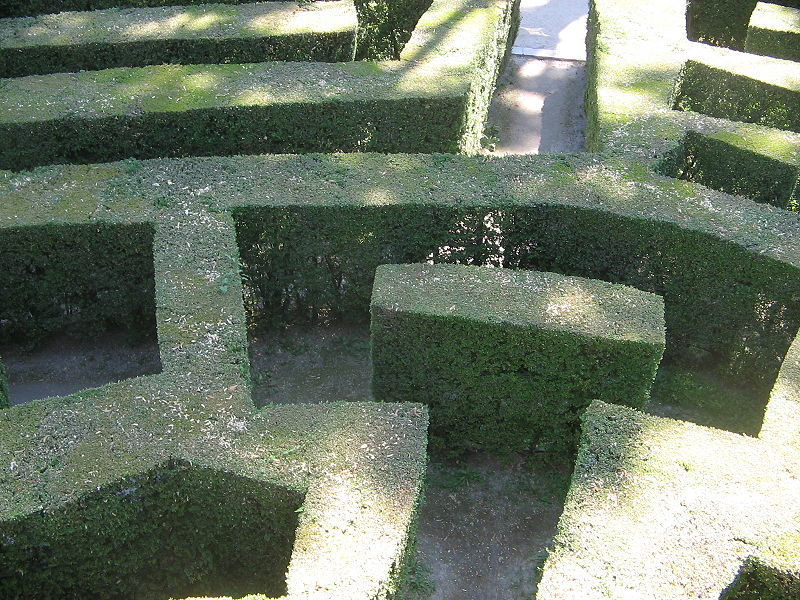
Monday, April 6, 2015

Twisting the Tale

AT left, a photograph of the labyrinth at the villa Pisani, Stra (Venice, Italy). The use of the photo comes from the generosity of P Tasao. Thanks, P!

I'm plotting.

I'm circling back, confusing the trail, changing black for white.

I'm not playing fair.

I've entered the layer of Emmanuel Goldstein. Maybe I too will be subjected to the daily two minutes of hate. (1984).

The world I've created came apart at the seams from rot and mildew as all empires do. In my case, I've precipitated the decline through an open secret that tears away at faith and government institution but which a large number of the population deny as truth.

It's a bit like the AIDs deniers. Mugabe can say all he wants; but, people still die.

I'm trying to wrap a plot inside itself by telling myself the tale and not getting bored. I've read clever literary bits before which did not interest me for long outside of the clever machinations of the writer.

Instead, I'm thinking Casablanca: who is the real bad guy?

"Just like other men, only more so."

I'm off to twist the tale.

Wish me luck.

Sunday, March 29, 2015

Aim Takes Effort

At left, the FBI target practice from vehicle in the 1930's.

Copyrright free photo from wikicommons.

New project. new story. New conflict.

I love stories with a weaving conflict. One, the another, then another and somehow they're related by more than the presence of the protagonist.

These sorts of conflicts work well within the confines of a crime story.

I have a different sort of crime story on my mind now and the protagonist is a juvenile. She's worldly, tough, and uniquely equipped to deal with the darker subjects of crime fiction. This is no YA tale. This is a crime story with a young protagonist.

I'm working on the weave. I have to dance the reasoning of believably as to why she'd be involved and why she'd be uniquely suited to be involved. I think I've got that part down.

Now, to weave the events together with the antagonist, the contributing conflicts, the cause and effect pendulum.

I once accidentally tapped a dead short from a pair of 220 cables hanging from the shop ceiling attached to jumper cable heads. We had extremely large electric motors in the shop (oilfield equipment)  and this necessitated ready power for the repair and servicing cycle. We had live power dangling from the ceiling in a most OSHA unapproved fashion.

Anyway, I dead shorted these on a piece of motor housing instead of through the armature.  Pop. Threw me a dozen feet back onto the shop floor before the 200 amp breaker blew for the circuit. Yea, if it had gone through me in earnest, would have killed me.

I always wanted a power cell with that sort of juice. I'm going to give one to my protagonist. She's going to pig-stick a fellow when over-matched.

Buffy got nothing on Kate.

I better get to work. Wouldn't want to make her mad.

Friday, March 27, 2015

Rats

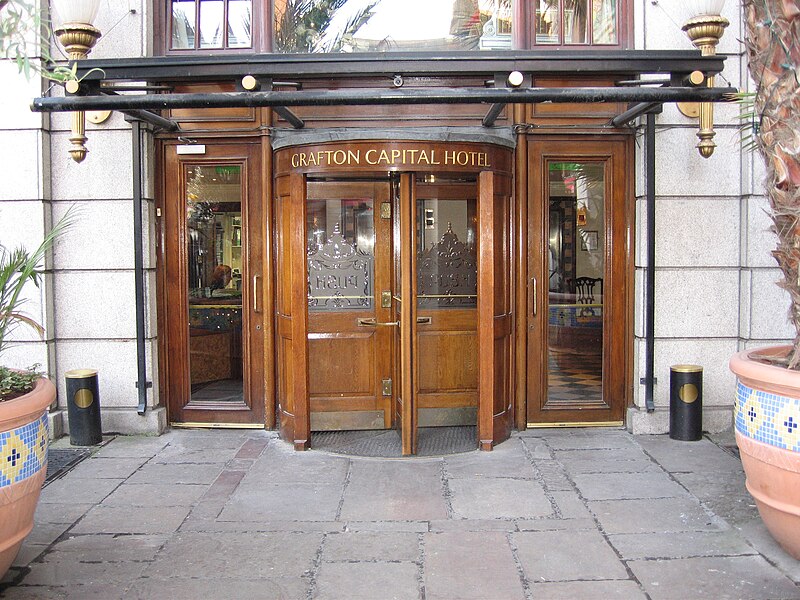
The pub in the picture is The One-Eyed Rat. Photo by Gordon Hatton as part of the UK Geograph project. He allows us to share the image here from wikicommons for the attribution. Nice. Oh - and look at the flowers in the foreground.

The pub is in Allhallowgate.

I'm thinking tonight of betrayal. I'm thinking of the rat. I'm thinking of the narrative tension derived when we know there is a Judas in the room but the protagonist does not.

I'm thinking of techniques by which I can extract this tension as a plot element among allies.

Rats. Very interesting. Very.

Have a beer.

Monday, March 23, 2015

Snapshot


At left, the image attribution of Arthur fellig known as Weegee. He photographed graphic street and crime scenes in and around the Manhattan area during the 30's and 40's.

Announced this week in New York Times, the NYPD evidence photo trove is to be digitized and released sometime this summer. It will be available online.

I have a book of Weegee's photographs on my desk beside 1984 and my always handy Pelican Shakespeare.

Voyeurism?

Yes. I find scenes of crime and the people around crime simply remarkable inspiration for the emotional journey these people are undertaking.

I have carried in my wallet little pictures from periodicals. G. Gordon Liddy was in there before he became a talk show pundit. I had a picture of a Cadillac Eldorado driving over the chest of a striking worker outside the Frontier in Las Vegas for a good decade or so. I had a picture of a Titan block D2 for a bit. I've had a snapshot of some fellows doing body reclamation work from Rwanda. I've also had a section of a map embossed with the targeting coordinates for Moscow as well as a photograph of  the entrance to section 33 at Lubyanka.

I need strong emotion. I deal with strong subjects. I like strong photographs.

Growing up with the on-screen execution of a prisoner by the Chief of the National Police in Saigon sticks in my mind. Eddie Adams took that picture for NBC.

I'm off to dispose of some characters now.

I can't wait for summer. Gonna be a grand old time.

Sunday, March 22, 2015

Broad Strokes

Image at left from wikicommons provided by Gvstellingwerf. Nicely done.

I prefer stories where the details are largely omitted. I prefer the constructs to be rendered with broad strokes.

I've done some critiques lately and fully understand the author's need to convey the intimate details of setting and style.

Rain. The streetlamp. Two fellows in trench-coats seemingly waiting for a taxi which never comes.

I love these scenes. What I enjoy less is the detail of the street lamp's Ionic column design or the depth of water in the gutter.

I enjoy providing my own images.

If you must tell me things, please make them things I cannot otherwise easily discern. A milieu that I must understand?  Tell me - or better yet show me.

If you spoon feed me details, I'll get full quickly.

I won't be hungry for your story any longer.

Hunger. There might be Cheetos in the kitchen.

I'm off to forage - er - I mean write.

Really.

You can imagine the orange-stained fingers for yourself.

Friday, March 13, 2015

What We have, What We Want

At left, a wonderful picture of a meadow by Conny on wikicommons. Thanks for allowing us to use the image, Conny. Lovely.

The meadow at left is what I want. The meadow I have is melting, but still has quite a lot of snow upon it. Maybe next week.

I was struck today by how things work, and how we want them to work.

Also, what we have and what we want.

There is the draft we write. There is the draft we want.

The differences in these two things is some multiple of the hours in the chair it took to create that first draft.

I do better these days because I've learned not to make the mistakes in my early draft that I know I'll have to fix in later drafts.

I still make mistakes in the narrative flow, the prose, the emotional portrayals, the simple execution of grammar, revelations, motivations, and consequences. It still takes time to revise, correct, and lastly to edit.

We've all got work to do.

Some more than others.

It doesn't get done sitting around wishing for spring. It gets done by putting ass in chair and working diligently.

Your individual mileage may vary.  Flowers will blossom.

Will you beat them to full bloom?

Thursday, March 12, 2015

Big Ones Into Little Ones

At left, Mr. Hemingway's typewriter from his Key West studio.

Acroterion allows us to use their photograph through the creative commons license on wikicommons and for that, I am quite grateful. Thanks! Lovely framing. Nice focus, too.

The title today deals with turning big rocks into little ones by way of pounding them with a sledge hammer: the cliche punishment of depression-era criminals.

I'm a pounder. I beat the living shit out of my keyboard. Horrible.

I've joked here that I am a drunken chimp in my typing skills. Turns out, chimps are also amazingly strong.

Now, I'm not amazingly strong but I type like I'm the Hulk. Pound. Pound. Pound.

The more I'm into the flow, the harder I type. I've broken two laptops. Yes, that hard.

Ernie used a mechanical. Looks like an Underwood to me but I'd be glad to hear from someone who knows. I'm not the Sherlock of typewriters. Before my time to some degree.

I've had a Remington portable, a Royal (govt second hand $20), an IBM Selectric II, and another Royal - a safari model 1963 -  whose loss pains me to this day. Lovely machine.

Stolen from a hotel room in Rome I was slow getting back to one weekend ...

Anyway, I pound the keys.

I use a mechanical keyboard plugged into the usb port of various laptops. I'm getting good mileage out of this das keyboard model. I'm growing to like it.

I'd suggest anyone pounding out novels look into these mechanical keyboards, too.

Really helps the accuracy of the typing.

The writing - well. I'm not sure it does anything at all for the writing.

I have to go do something about the writing now, myself.

So do you.

Sunday, March 1, 2015

Direction and Course

At left, a hiking compass in a photo from Romary on wikicommons. Nicely done, too. Thanks for the use, Romary.

There is the direction the story wants to go in and then there's the course we set for it ourselves.

In re-write, I balance these two things trying to bring the arrangement into concordance.

I love stories that have depth. I love the multi-layer character at work and we see the intent and the action and the consequence and , yes - the regret.

I enjoy the effect of watching a character depart from a course due to their will or the influence of others, and the struggle to evaluate their original intent and its likelihood of attainment.

I like characters lead astray. I like characters lead astray even when they know that going off plan is a questionable act.

I like corruption. I like corruption of the soul, the psyche, the mind, the spirit. I like characters who want to do good but do bad.

I also like characters habituated to the bad who occasionally do good. I like it when they're tricked into doing good.

Han Solo is a rogue who has a soft heart. Meh.

I prefer a darker character.

Jake Geddes in Chinatown?

Anyway, I'm working out the concert of course and direction in a story. I'm resolving dichotomies in my writing so that they're less glaring and more acceptable to an innocent eye.

I'm sanding the pages of the story. The pieces are recognizable and I'm dry fitting the whole thing together.

I hope you navigational obstacles are easily overcome.

You can say you use GPS.

There's no signal in a crime story. There's no outside help available. Only the moral compass in the pocket can help.

Crime renders the characters confined to their own dead zone of existence.

Dead zone, heh heh.